Thursday, November 19, 2015

CVUSD board meeting nob 17, 2015

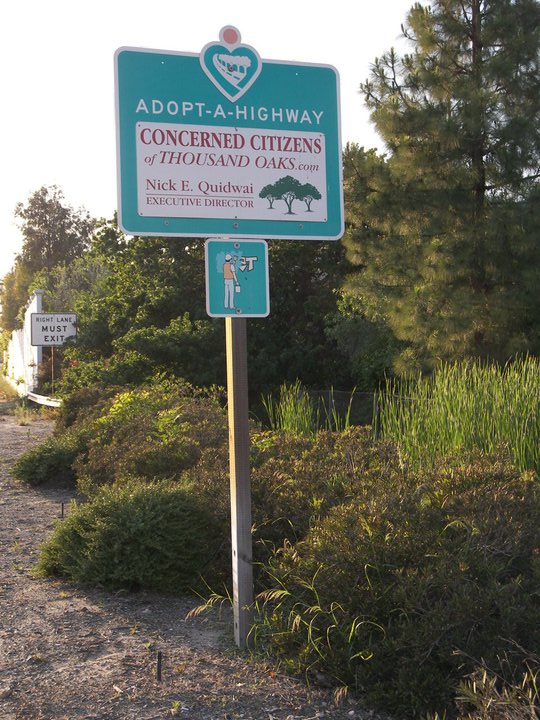
NICK Ekbal Quidwai shared 3 photos with you from the Flickr app! Check them out:
https://www.flickr.com/photos/67148044@N00/shares/h298U8
Wednesday, November 18, 2015

When Iqbal called for a Muslim India, within India MUSTAFA ZAFAR Dawn Nov 18, 15

Iqbal's 1930 speech never actually called for a partitioned Muslim state. —Photo by The Citizens Archive of PakistanIqbal's 1930 speech never actually called for a partitioned Muslim state. —Photo by The Citizens Archive of Pakistan

For too long now there has been a parochial understanding of what Pakistani history as an academic discipline entails, as there is a firm assumption that it has to be accountable to the public eye.

Many are of the idea that history is perhaps, already present in the past. And that the historian's role is only one of assorting facts and events along a chronological and byte-sized narrative; as if it were a jigsaw puzzle in which the pieces were facts that fit in a fixed tapestry of national belonging.

These traditionalist frameworks become very real when narratives associated with Dr Muhammad Iqbal's statements regarding the official demand for separation led to the public de facto assuming that Iqbal also called for a partitioned Muslim state.

The infamous Pakistan studies textbook presents Iqbal as a pious orthodox Muslim thinker with the message being that Pakistan, the homeland, can be accredited to his vision.

It is not surprising then that Iqbal has become the father of Pakistan as he was the first to call for "the Punjab, North West Frontier Province, Sind and Balochistan amalgamated into a single state" in his presidential address to the 21st session of the All-India Muslim League that was held in Allahabad on the 29th of December, 1930.

What is surprising, however, is that if one were to read Iqbal's seminal presidential address in the historical context, it becomes clear that his vision never actually called for the partitioned Muslim state of Pakistan.

From the very onset of Iqbal's address, it is clear that he was posing the ideological dichotomy between Islam and Western nationalism as a conflict as it had the potential to disrupt Islam as an edifice of life.

In setting the parameters of this conflict between Islam and modern nationalism within the South Asian context, the genius of Iqbal neither chose an isolationist approach, such as the one adopted by the Deobandi school of thought, nor did he want to appease the colonial powers and their separation of church and state.

Also read: The Pakistan Ideology — History of a grand concoction

Instead, Iqbal expounded the idea that Islam was not just an "ethical ideal" but also an overarching legal political "social structure" which, throughout the "life-history of the Muslims of India" had unified "scattered individuals and groups".

For Iqbal, Western nationalism was centred on a "narrower system of ethics" which took agency of religion away from the public to the private sphere.

Iqbal countered the idea of territory arguing that Islam was a "force for freeing the outlook of man from its geographical limitations" and that religion was a power of the utmost importance in the life of individual, as well as of states.

He maintained that if democracy were to be applied there had to be recognition of the "units of Indian society" not from a territorial standpoint but rather through accounting for the diverse nature of India's "communal groups".

Within them, Indian Muslims were the most homogenous and united in India and were the only people who could be "fitly described as a nation in the modern sense of the word", he argued.

But does that mean Iqbal was talking about a partitioned Muslim state?

For many the demand for Pakistan after Iqbal's address which called for the North-West to become a single state and the added oppression under the "Hindu" Congress is enough to solidify the notion that Iqbal envisioned Pakistan.

School histories cite remote statements from Iqbal's 1930 address contending that he can be viewed as a separatist; various communal groups could simply not "sink their respective individualities in a larger whole" are those gold lines which tickle the patriotic heart.

Yet nationalist narratives conveniently forget Iqbal stating that were communal groups entitled to the autonomous development of their cultures in their own "Indian home-lands" then they would be ready to safeguard the "freedom of India".

Also read: What is the most blatant lie taught through Pakistan textbooks?

The omission of Iqbal's arbitration between Western ideals of state and the role of Islam as mentioned in his address from our school histories is unfortunate – his answer for this disruption is what makes Iqbal an unequivocal visionary for Muslim nationalism in a land as diverse as India.

"Muslim India within India"

There is also a need to contextualise the December 1930 presidential address and Iqbal's historical situation before painting with a brush the Pakistani green of national zeal as the poet-politician's tract on autonomous states within a federation goes amiss in our mainstream narratives.

The intended audience for the address was not just Indian Muslims, but the speech was a direct rebuttal to the Nehru report of 1929 which "rejected the crucial Muslim demands for a separate electorate and weightage for minorities".

The concept of a federation for Iqbal warranted an abolition of the Central Legislative Assembly and instead called for an assembly which would represent the federal states and thus eliminate the "communal problem".

How can one argue for a partitioned Muslim state if Iqbal himself affirmed that "proper redistribution will make the question of joint and separate electorates automatically disappear from the constitutional controversy of India".

Allama Iqbal at the Round Table Conference in 1931. —Photo by The Citizens Archive of PakistanAllama Iqbal at the Round Table Conference in 1931. —Photo by The Citizens Archive of Pakistan

A solution could not be reached until all parties understood that the argument of the Muslims in India was "international and not national" as communal groups were nations in themselves.

When Iqbal called for a consolidated Muslim state, which would be centralised in a specific territory, namely the North-West of India, let us not forget that he argued for a "Muslim India within India".

Perhaps, what makes Iqbal's rhetoric even more powerful was that his political proposal was adjoined and fitted neatly into his theory of the universal Muslim millat.

The consolidation of the Muslim state was a stepping stone towards the unification of the world Islamic community, as Islam was a "peoples building force" and again not just an "ideal".

A consolidated state for Islam was an "opportunity to rid itself from the stamp of Arab imperialism" and instead to revamp its "law, culture, education and to bring them in closer context with the spirit of modern times".

Also read: Independence, not partition

There is nothing orthodox about Iqbal and he never called for a Pakistan as a partitioned Muslim state in his December 1930 presidential address to the All-India Muslim League – an address that is recalled as the first stepping stone towards a separate homeland justified in our school histories through isolated statements of sovereign marked territory.

Instead, we need to read Iqbal's statements closely on that day, and uphold him as a Muslim nationalist of the time, whose political proposals called for harmony between Western democracy and Islamic nationalism through an overarching concept of Islam as a cultural force within India.

It is ironic that answering a question about who spelt out the idea of Pakistan in school histories has become something of a joke because the kind of separatism Iqbal had been spelling out actually never had its desired effect on Indian Muslims.

The question put up to the Pakistan studies student about the 1930 address should not be filtered through an already present Pakistan in mind. Rather, points of study during the 1930s should flesh out how Muslim proposals projected their visions for syncretic power between religiously marked categories of "majorities" and "minorities" in a British free India.

"In the world of Islam today, we have a universal polity whose fundamentals are believed to have been revealed, but whose structure … stands today in need of renewed power by fresh adjustments. I do not know what will be the final fate of the national idea in the world of Islam," said Iqbal.

References:

  • Pirzada, Syed Shariffuddin, Foundations of Pakistan: All-India Muslim League Documents (1906-1947) Volume 2, (National Publishing House, 1970).
  • R.J. Moore, 'Jinnah and the Pakistan Demand,' Modern Asian Studies, XVII, 4, (1983): pp. 529-546.
  • Naim, C.M, Iqbal, Jinnah, and Pakistan: The Vision of Reality, (New York, 1979).

Sunday, October 4, 2015

Oregon Shooter Asked About Religion, Another Survivor Attests

I was reading this article on Huffington Post, and I thought you might be interested in reading it, too.

Oregon Shooter Asked About Religion, Another Survivor Attests

http://www.huffingtonpost.com/2015/10/03/oregon-shooter-asked-about-religion_n_8238790.html

CRIME

Oregon Shooter Asked About Religion, Another Survivor Attests

Cheyenne Fitzgerald's recollection is consistent with other witnesses' accounts.

 20 hours ago | Updated 38 minutes ago

ROSEBURG, OREGON -- Another survivor of Thursday's mass shooting at an Oregon community college remembers the gunman asking about religion before shooting her, the victim's family members said on Saturday.

Cheyenne Fitzgerald, 16, was shot in the back during the massacre at Umpqua Community College in Roseburg, Oregon. Her kidney was removed and she remains in intensive care.

"The shooter asked what her religion was and she said, 'nothing,'" said the young women's aunt, Colleen Fitzgerald, relaying her niece's account to reporters outside Mercy Medical Center in Roseburg, where the teen is being treated. 

Chris Harper-Mercer, the shooter, still fired on Fitzgerald, despite her not being a Christian.

Fitzgerald's description is consistent with accounts from other witnesses, who also said the shooter asked the victims about their faith before shooting them. But it also adds doubt to claims that the shooter targeted Christians, as some witnesses have implied. 

Janet Willis, whose granddaughter Anastasia Boylan survived the attack, told The Associated Press on Saturday that Boylan recalled the shooter asking each person to state their religion. If they were Christian, Willis told the AP, Harper-Mercer would shoot them in the head. 

However, another survivor, Rand McGowan, told his mother, Stephanie Salas, that Harper-Mercer was not specifically targeting Christians.

"'Do you have a God? Are you Christian? Do you have a religion?' It was more so saying, 'You're going to be meeting your maker. This won't hurt very long.' Then he would shoot them," Salas told the AP.

Douglas County Sheriff John Hanlin, who also spoke to reporters on Saturday, did not provide information about the shooter's motive.

Fitzgerald also said Harper-Mercer spared a male student and gave him an envelope to give to police, appearing to confirm Boylan's description of events to her family.

"The shooter gave a student an envelope and said, 'You're going to be the lucky one,'" Fitzgerald's aunt told reporters.

Bonnie Schaan, Fitzgerald's mother, said her daughter is slowly recovering. "She's starting to remember things and talk, but she is still jumpy when she hears a noise," Schaan said. "Someone moving a chair will set her off."

Thursday was Fitzgerald's fourth day of college, where she was studying to become a nurse. 

Speaking through tears, Schaan said, "I know my daughter's strong and she's gonna get through this." She noted her daughter posted on Facebook sometime shortly after being shot, writing, "The fucker shot me in the back."

Fitzgerald survived, her aunt said, by playing dead. Schaan was told that Cheyenne had a hand in saving her friend Boylan's life. "That's my daughter," Schaan said. "That's Cheyenne." 

Schaan added that Fitzgerald and Boylan were together when the first shots rang out and helped one another. (Boylan's family has said that she, too, survived by playing dead.)

"We are blessed that Cheyenne is here today," Schaan said. 

"I'm sorry for everyone in the community who don't have their children with them," she concluded.

Fitzgerald is one of 9 injured survivors, including Boylan, McGowan and Chris Mintz, the army veteran who heroically charged Harper-Mercer. The shooting left 9 people dead.

Harper-Mercer's family released a statement on Saturday as well, expressing their sorrow and regret for his actions. 

"We are shocked and deeply saddened by the horrific events that unfolded on Thursday, October 1," the family said in a statement tweeted by local TV reporter Kim Eiten. "Our thoughts, our hearts and our prayers go out to all of the families of those who died or are injured."

Hanlin revealed earlier on Saturday that the medical examiner had ruled Mercer-Harper's death a suicide. He reportedly took his own life during a firefight with law enforcement officers.

CARE ABOUT THIS? TAKE ACTION RIGHT HERE

Send your condolences to those affected by the mass shooting in Oregon

Are we doing enough to end gun violence in the US?

My deepest condolences are with the victims, their families and those affected by the #UCCshooting

Email us corrections or feedback.

DOWNLOAD_HUFFPOST


Sent from my iPad Iqbal Nick QUIDWAI Newbury Park CA USA

Sunday, July 19, 2015

The Haramain Heroes - Documentary on the Cleaners of the Sacred Mosques - Ilm Feed

The Haramain Heroes - Documentary on the Cleaners of the Sacred Mosques - Ilm Feed: "The Haramain Heroes – Documentary on the Cleaners of the Sacred MosquesJune 24, 2015"


'via Blog this'

slimail | VIDEO: Fla. Prof Says Muslims 'Procreate Like Mushrooms After the Rain,' 'The Problem is Islam'

slimail | VIDEO: Fla. Prof Says Muslims 'Procreate Like Mushrooms After the Rain,' 'The Problem is Islam': "VIDEO: Fla. Prof Says Muslims 'Procreate Like Mushrooms After the Rain,' 'The Problem is Islam'"


'via Blog this'

She's an imam in LA and doesn't have patience for a strict interpretation of Islam | Public Radio International

She's an imam in LA and doesn't have patience for a strict interpretation of Islam | Public Radio International: "She's an imam in LA and doesn't have patience for a strict interpretation of Islam
This story is a part of

BBC News
July 17, 2015 · 12:15 PM EDT Updated: July 18, 2015 · 10:15 PM EDT
By Jane Little (follow) "


'via Blog this'

Massive Earthquakes and Tsunamis Now Confirmed Soon To Destroy U.S. Pacific Northwest | World Truth.TV

Massive Earthquakes and Tsunamis Now Confirmed Soon To Destroy U.S. Pacific Northwest | World Truth.TV: "
God even warned us this was coming back in the 1970′s! And it’s here…it’s coming!"


'via Blog this'

Massive Earthquakes and Tsunamis Now Confirmed Soon To Destroy U.S. Pacific Northwest | World Truth.TV

Massive Earthquakes and Tsunamis Now Confirmed Soon To Destroy U.S. Pacific Northwest | World Truth.TV: "
And, here is the video I did about this months ago! People have been warning about this for a while now. Will you finally listen? Will you prepare?

Alarming New Information-USA About To Shake and Bake-Experts Warning To Prepare!"


'via Blog this'

Massive Earthquakes and Tsunamis Now Confirmed Soon To Destroy U.S. Pacific Northwest | World Truth.TV

Massive Earthquakes and Tsunamis Now Confirmed Soon To Destroy U.S. Pacific Northwest | World Truth.TV: "
And, here is the video I did about this months ago! People have been warning about this for a while now. Will you finally listen? Will you prepare?

Alarming New Information-USA About To Shake and Bake-Experts Warning To Prepare!"


'via Blog this'

Saturday, July 18, 2015

accident due 1st rain Newbury Park CA July 18th 2015

http://www.magisto.com/video/YAQVO0EWAyExQwRiCzE?c=e&l=mmr1&tp=AgMCXjUmPFZFVg0IXHprUhMACAtSeGoIF1dcAlJ6OllBX1VcW3toDVcUCUkFOioIFDkFXlc5MQ8UCTNIDy48ElcTH18YEDEPTFRcClx5blpDVEpZAi42BRQKUV8HLjEH&openemailshare=1

Thursday, July 16, 2015

Chattanooga Mosque Where Gunman Worshiped Mourns Marines - The New York Times

Chattanooga Mosque Where Gunman Worshiped Mourns Marines - The New York Times: "The mosque and center, he said, normally draw about 200 or 300 people for Friday Prayer, and serve a diverse community with roots in Pakistan, Africa, India, the Middle East and the United States.

The bellicose interpretations of jihad, he said, were not preached at the mosque, and he said that parents were sensitive to the way that the Islamic State and other radical groups had used the Internet to entice and recruit young American and European Muslims to violent causes.

“We certainly do not want to be part of that demented ideology,” he said. “That is not the message we preach here. What people do on the Internet or the World Wide Web or in their own homes, we can’t control that.”"


'via Blog this'

Tennessee Gunman Mohammod Youssuf Abdulazeez: ‘Life Is Short and Bitter’ - The New York Times

Tennessee Gunman Mohammod Youssuf Abdulazeez: ‘Life Is Short and Bitter’ - The New York Times: "The mosque was in mourning for the Marines he is accused of killing. To honor them, Dr. Sheikh said, the center canceled its Eid al-Fitr celebration planned for Friday. Eid is normally a joyous affair, with children receiving gifts. About 1,000 people normally attend.

“We have canceled out of respect and remembrance for our fallen Marines,” he said.

Mary Winter, 32, the president of the Colonial Shores Neighborhood Association, said she knew the family, and that they were known as good and conscientious neighbors.

“This has been a huge shock in our neighborhood and our community,” she said. “Our hearts go out to the Marines who were killed, but our hearts also go out to the family.”

"


'via Blog this'

Chattanooga gunman reportedly blogged about Islam, showed increased signs of devotion | Fox News

Chattanooga gunman reportedly blogged about Islam, showed increased signs of devotion | Fox News: "The New York Times reported that recent family photographs posted on Facebook showed Abdulazeez with a newly grown beard. Dr. Azhar Sheikh, a founding member of the Islamic Society of Greater Chattanooga, told the paper that Abdulazeez had also begun attending Friday prayers regularly over the past two to three months. Sheikh said the Abdulazeez family had attended services in Abdulazeez's younger days, but he had stopped doing so, and Sheikh assumed that he had moved away.

According to the Times, Abdulazeez was born in Kuwait to a family of Jordanians. A federal official told the paper that Abdulazeez had become a naturalized American citizen, though it is not clear when. Abdulazeez grew up in a middle-class suburban subdivision just across the Tennessee River from Chattanooga itself. The Chattanooga Times Free Press, citing county property records, reported that Youssuf Abdulazeez, the family patriarch, had owned the house since 2001. It was not clear whether the family had lived elsewhere in the U.S. before arriving in Chattanooga."


'via Blog this'

Muhammad Youssef Abdulazeez: 5 Fast Facts You Need to Know | Heavy.com

Muhammad Youssef Abdulazeez: 5 Fast Facts You Need to Know | Heavy.com: "Muhammad Youssef Abdulazeez has been identified by the FBI as the gunman who fatally shot four Marines and wounded a police officer on Thursday in shootings at two military recruiting and training centers in Chattanooga, Tennessee.

Abdulazeez, 24, is also dead, the FBI says.

At least two others were injured, including one in critical condition. The officer is in stable condition. The shootings happened at separate military reserve centers on Lee Highway and Amnicola Highway."


'via Blog this'

Four Marines Killed in Chattanooga Shootings - The New York Times

Four Marines Killed in Chattanooga Shootings - The New York Times: "The episode unnerved one of Tennessee’s largest cities. The Chattanooga State Community College posted an alert on its website that urged people on its main campus to remain inside and to close doors. Lee University, which is near Chattanooga, temporarily ordered a lockdown, the university said.

Bradley Square Mall, in the nearby suburb of Cleveland, also said it had initiated a lockdown, but the mall’s management said that local media reports of gunfire there were inaccurate. “There have been no shots fired at Bradley Square Mall,” a post on the mall’s Facebook page said. It called the lockdown “a safety precaution.”"


'via Blog this'

Chattanooga Shooting Suspect Identified As Muhammad Youssef Abdulazeez

Chattanooga Shooting Suspect Identified As Muhammad Youssef Abdulazeez: "The suspect in the shootings that left five people dead on Thursday in Chattanooga, Tennessee, has been identified as Muhammad Youssef Abdulazeez, authorities told CBS and NBC.

The shootings took place at two military facilities. Four Marines and the gunman were killed. Three other people were injured, including a police officer who was shot in the ankle, Chattanooga Mayor Andy Berke said during a press conference.

The shooter used several guns in the attack that started at a military recruitment center around 10:45 a.m., authorities said. He then drove to a military reserve center about 7 miles away, where he opened fire.
 
It's not clear if the 24-year-old suspect, who authorities believe was born in Kuwait, was an American citizen, a U.S. official told The Associated Press. He lived in Hixson, Tennessee, the AP reports. 
 
On Thursday afternoon, authorities swarmed the house where they believe Abdulazeez lived, according to the AP."


'via Blog this'

Mass Shooting In Tennessee Leaves 4 Marines Dead

Mass Shooting In Tennessee Leaves 4 Marines Dead: "All four killed were Marines, authorities said. 

Three people were injured, Marissa Bell, communications coordinator for the city of Chattanooga, told The Huffington Post. At a press conference Thursday afternoon, Chattanooga Mayor Andy Berke said an officer who was shot in the ankle is recovering.

"It is incomprehensible to see what happened and the way that individuals who proudly serve our country were treated," Berke said.

Authorities will investigate the shooting as an act of domestic terrorism, U.S. Attorney Bill Killian said. 

The suspect, who law enforcement agents have identified as 24-year-old Muhammad Youssef Abdulazeez, opened fire at a military recruitment center around 10:45 a.m., authorities said, before driving to a Naval and Marine reserve center about 7 miles away.

The shooter used "numerous guns" in the incident, and is believed to have lived in the Chattanooga area, authorities said at the news conference. 

Witnesses said the shooter drove up to the reserve center in a convertible and opened fire. "


'via Blog this'

Saturday, May 9, 2015

Smokers’ Corner: Once upon a Saudi king - Pakistan - DAWN.COM

Smokers’ Corner: Once upon a Saudi king - Pakistan - DAWN.COM: "In 1979, dozens of armed Saudi fanatics stormed the Holy Mosque in Makkah. According to author Yaroslav Trofimov (in Siege of Mecca), the uprising was an expression of repressed anger among Saudi conservatives against Faisal’s modernisation policies.

The uprising was crushed by Khalid, but it made future Saudi monarchs give a lot more space to the conservatives, slow down modernisation and channel the radicals by exporting their energy and ideas out of the Kingdom and into Muslim lands that were recipients of large Saudi economic hand-outs.

But by then Nasserism was dead, Ba’ath Socialism was receding and the Soviet Union was on the brink of collapse.

So the exported ideas and energies were now being disseminated into a tumultuous vacuum. That is why they violently transfigured and became almost entirely nihilistic, further tarnishing the legacy of perhaps the most unique Saudi monarch ever.

Published in Dawn, Sunday Magazine, May 10th, 2015"


'via Blog this'

Smokers’ Corner: Eqbal Ahmed: the astute alarmist - Pakistan - DAWN.COM

Smokers’ Corner: Eqbal Ahmed: the astute alarmist - Pakistan - DAWN.COM: "Schaar suggests that Eqbal had also predicted tragic events like 9/11. Eqbal had interviewed Osama Bin Laden in Peshawar in 1986 and in the early 1990s suggested that the same ideology that had been drummed into men like Osama by the Americans and the Pakistanis in the 1980s, would spiral out of control and turn the indoctrinated into adversaries.

Eqbal spend the last decade of his life in Pakistan writing a weekly column for Dawn. He continued to advocate social democracy in Muslim countries as an antidote to extremism, poverty and injustice.

His greatest ambition was to establish a large social sciences university in Pakistan that could herald in a progressive and enlightened Muslim Renaissance. Unable to raise the $30 million that was required to build such a project, Eqbal succumbed to cancer in 1999. He was 65.

Published in Dawn, Sunday Magazine, May 3rd, 2015"


'via Blog this'

Truth About Balochistan - By Aisha Baloch: Who is Mama Qadeer?

Truth About Balochistan - By Aisha Baloch: Who is Mama Qadeer?: "Friday, 10 April 2015

Who is Mama Qadeer?

"Mama Qadeer is very old man who is seeking justice for innocent missing people along with Banuk Farzana Majeed and his VBMP team"

This is what you will read in all the leading newspapers of Pakistan whenever they write about Mama Qadeer Reki, but who is he actually? Does anybody know his background? Who made him a "Human Rights Activist"?


I will try to answer these questions in this article. 

Mama Qadeer Reki who is seen seeking "justice" for his son and many others on media is not known to many people. 

Who is the son of Mama Qadeer Reki?"


'via Blog this'